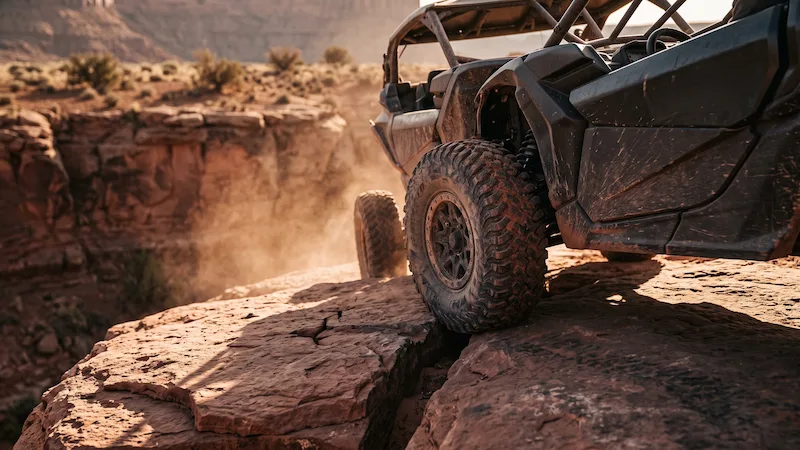
Rock does not reward the most aggressive tire on the shelf. It rewards the one that wraps an edge without tearing, and those two things pull in opposite directions — tall lugs find purchase, tall lugs also chunk off granite. Here is how to read a tire for rock, and what actually cuts a sidewall three miles from the trailer.
Rock Is a Casing Problem, Not a Tread Problem
On mud you are buying a tread pattern. On rock you are buying a carcass. The tread still matters, but the failures that end a rock day are not traction failures — they are punctures, cuts and torn lugs, and every one of those is decided by construction rather than by the shape of the blocks.
That reframing changes what you shop for. Ply rating stops being a spec-sheet number and becomes the difference between finishing the loop and fitting the spare on a ledge in the dark.
What Rock Actually Asks For
Four properties, and unlike mud you genuinely need all four. A tire that has three of them will get you through a season and fail on the fourth.
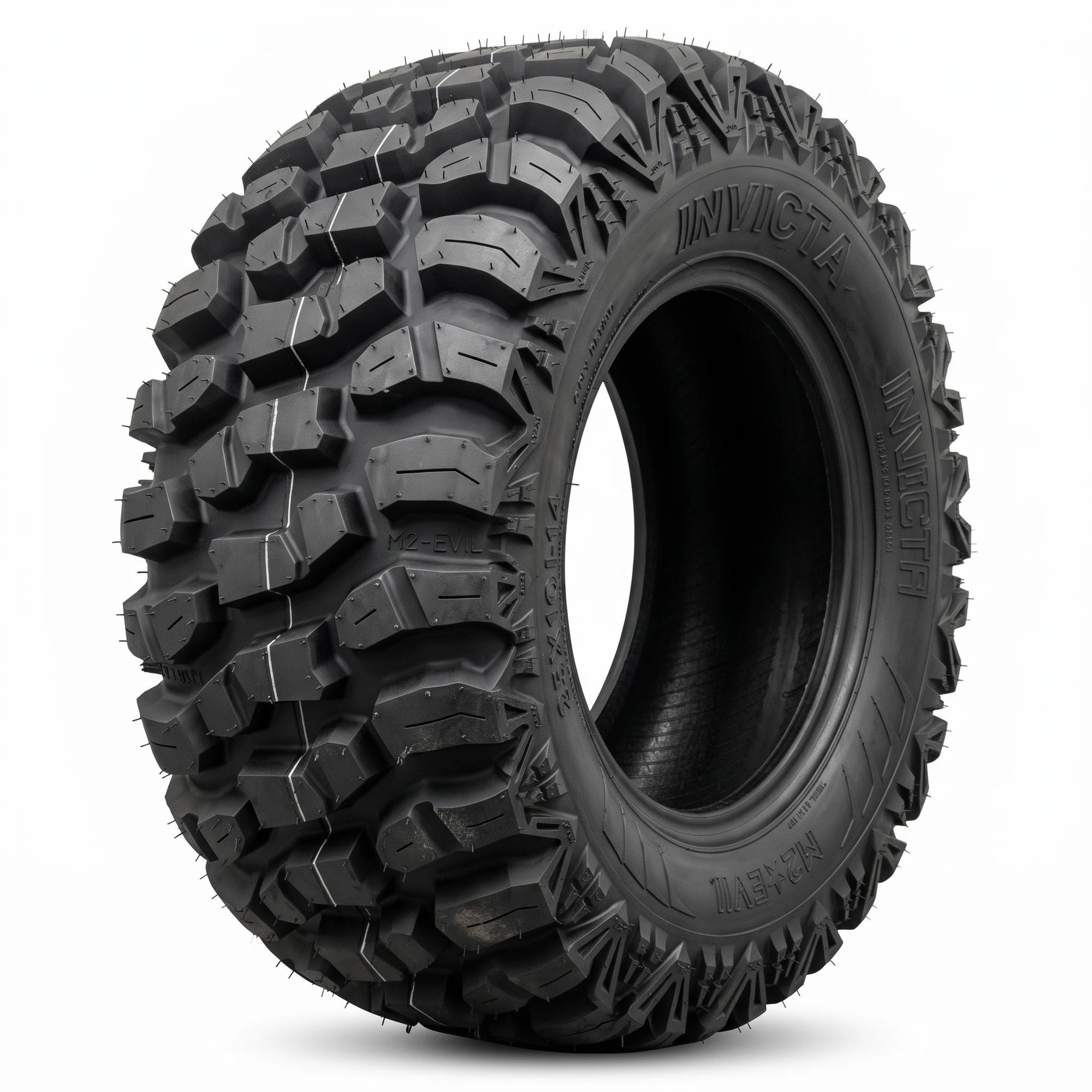
- A wide lug base. Tall, narrow, isolated lugs are levers. Load one against a rock edge and it tears at the root. A lug that is wide where it meets the carcass spreads that load instead of concentrating it.
- Sidewall coverage. Rock damage almost never lands on the tread face — it lands on the shoulder and the upper sidewall when the tire slides sideways against an edge. Lugs that wrap over onto the sidewall are armour, not styling.
- Eight-ply construction. Six-ply is enough tire for mud, where nothing sharp is trying to get in. On rock, ply rating is puncture resistance, and the extra plies are the cheapest insurance in the catalogue.
- A radial casing. Radials flex through the sidewall while keeping the tread face planted, which is exactly the behaviour a ledge asks for. Bias tires resist the deflection and skate across the edge instead of wrapping it.
Lug depth is nearly absent from that list, and deliberately so. A one-and-a-half-inch lug on a wide base outlasts and outclimbs a two-inch lug on a narrow one, every time, on stone.
The Three Kinds of Rock
Riders say "rock" the way they say "mud" — as though it were one surface. It is at least three.
Ledges and Shelf Rock
Vertical steps taken slowly under load. This is where sidewall coverage earns its keep, because the tire is pressed against a square edge with the machine's weight behind it. Air down into the middle of your range so the casing wraps the step, and let the throttle stay quiet.
Loose Talus and Baby Heads
Fist-sized rock that moves under you. Traction here is about footprint area rather than lug shape — more lugs in contact means more chances that one of them is on something that will not roll. This is the surface that punishes an overinflated tire hardest.
Slickrock and Sandstone
Grippy stone where rubber compound and contact area do all the work and tread pattern does almost none. Any tire with a reasonable footprint climbs sandstone. What kills you here is heat and abrasion — sandstone eats lugs, and an aggressive mud tire wears visibly in a single weekend.
What Fits Rock in the Invicta Line
Ranked by how much rock is in the ride rather than by how aggressive the tire looks parked.
| Tire | Sizes | Construction | Rock Suitability | Trade-off |
|---|---|---|---|---|
| M2 EVIL | 30x10-14 – 35x10-15 | 8-ply Radial | Best all-round rock choice | Louder than a trail tire on road |
| M2 EVIL – ATV | 25x8-12 – 28x10-14 | 8-ply Radial | Best ATV rock choice | Overkill on groomed trail |
| ALL-TERRAIN | 30x10-14 – 35x10-15 | 6-ply Radial | Good on mixed rock and trail | Ply rating is the limit, not the tread |
| BLACKWIDOW | 30x10-14 – 35x10-15 | 6-ply Bias | Fair — occasional rock only | Bias casing skates on ledges |
| BLACKTAIL | 25x8-12 – 28x10-14 | 6-ply Bias | Poor — deep-mud specialist | Tall lugs chunk on stone |
The pattern is consistent: eight-ply radial construction is the thing that makes a tire a rock tire, and the tread pattern only decides how well it also handles whatever else is on the trail that day.
Nobody walks out of the rocks because they ran out of traction. They walk out because something sharp went through a six-ply sidewall that should have been an eight.
Adam Miller, Senior Product Specialist
Four Questions That Pick the Tire For You
1. How far from the truck do you get?
A puncture two hundred yards from the trailer is an inconvenience. The same puncture eight miles into a canyon is a very long evening. Distance from recovery is the single best argument for eight-ply construction, and it has nothing to do with how hard you ride.
2. Is the rock sharp or rounded?
Weathered granite and sandstone are abrasive but blunt, and a six-ply tire survives them. Fresh-broken shale, mine tailings and creek-bed slate are knives. If your trails cut through either of the last three, the ply decision is made for you.
3. What else is in the ride?
Pure rock is rare. Most rock riding is rock plus creek bottom plus a few miles of connector trail, which is exactly the mixed brief the M2 EVIL is built for. If the mix leans hard toward maintained trail with rock sections, the ALL-TERRAIN gives up less on the connectors.
4. How heavy is the machine?
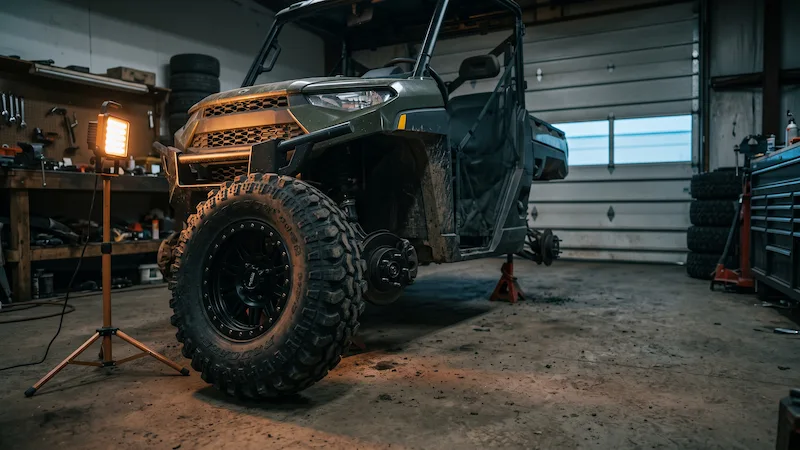
Weight is load, and load on a sharp edge is what breaks casings. A loaded touring machine, a two-seater with passengers, or anything carrying a winch bumper and a full rack should move up a ply rating before it moves up a lug height.
Setup, Pressure and Damage Control
Air down, but not to mud numbers. Rock wants the middle of your range — roughly twelve to fifteen PSI on a UTV, six to eight on an ATV. Low enough that the casing wraps an edge, high enough that it does not fold against the rim when you load a corner.
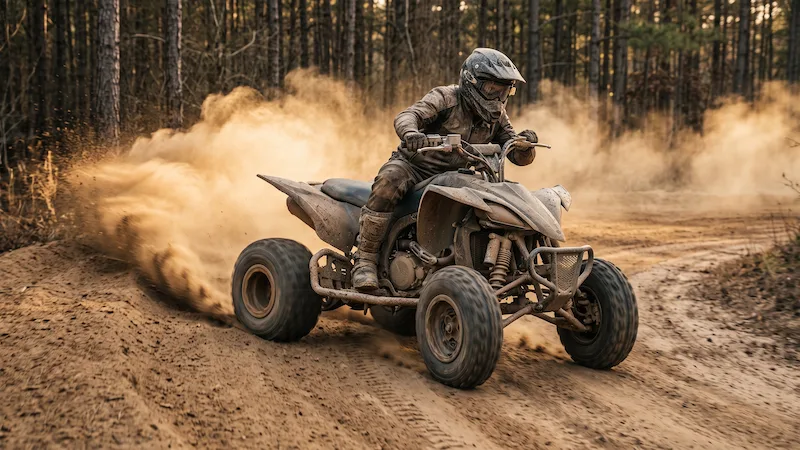
Momentum is what breaks tires. Almost every torn lug and cut sidewall comes from carrying speed into an edge instead of walking onto it. Rock is a low-speed, high-torque surface, and the machines that come home undamaged are the ones being driven that way.
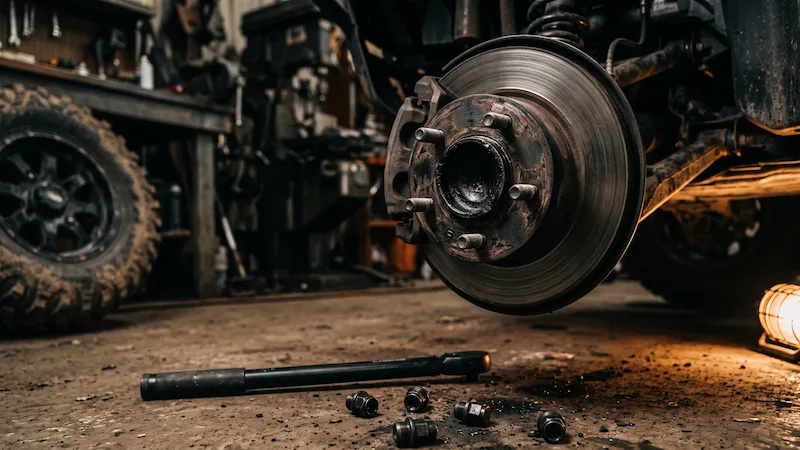
Beadlocks change the floor. At the bottom of the rock range a hard side load against a ledge is the classic bead-unseating event. Beadlock wheels let you use the whole range instead of leaving two PSI on the table as a safety margin.
Inspect the shoulders, not the tread. Tread wear on rock tells you very little. Look at the outer lugs and the upper sidewall after every rock day — cuts there are the ones that end trips, and they are visible long before they fail.