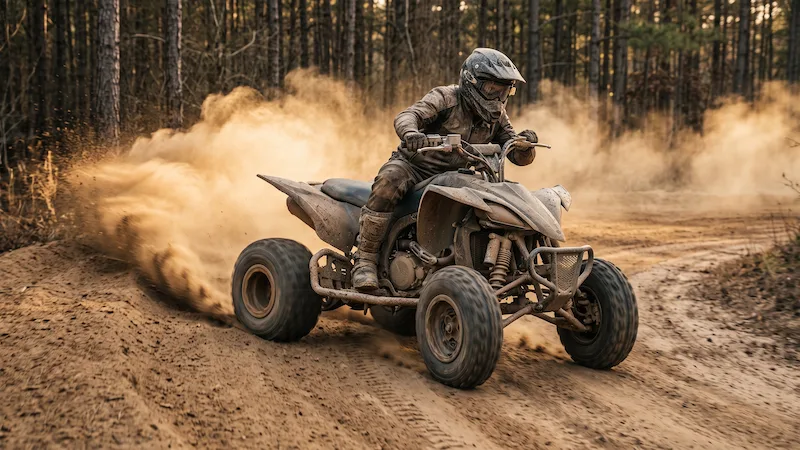
An aggressive tire on hardpack is slower, louder and shorter-lived than the tire that belongs there — and it does not grip any better. On a firm surface the tread has already found everything there is to find, and every extra millimetre of lug is now costing you speed, fuel and rubber. Here is what a fast trail tire is doing differently, and when giving up tread is the upgrade.
Why Aggressive Tread Loses on Firm Ground
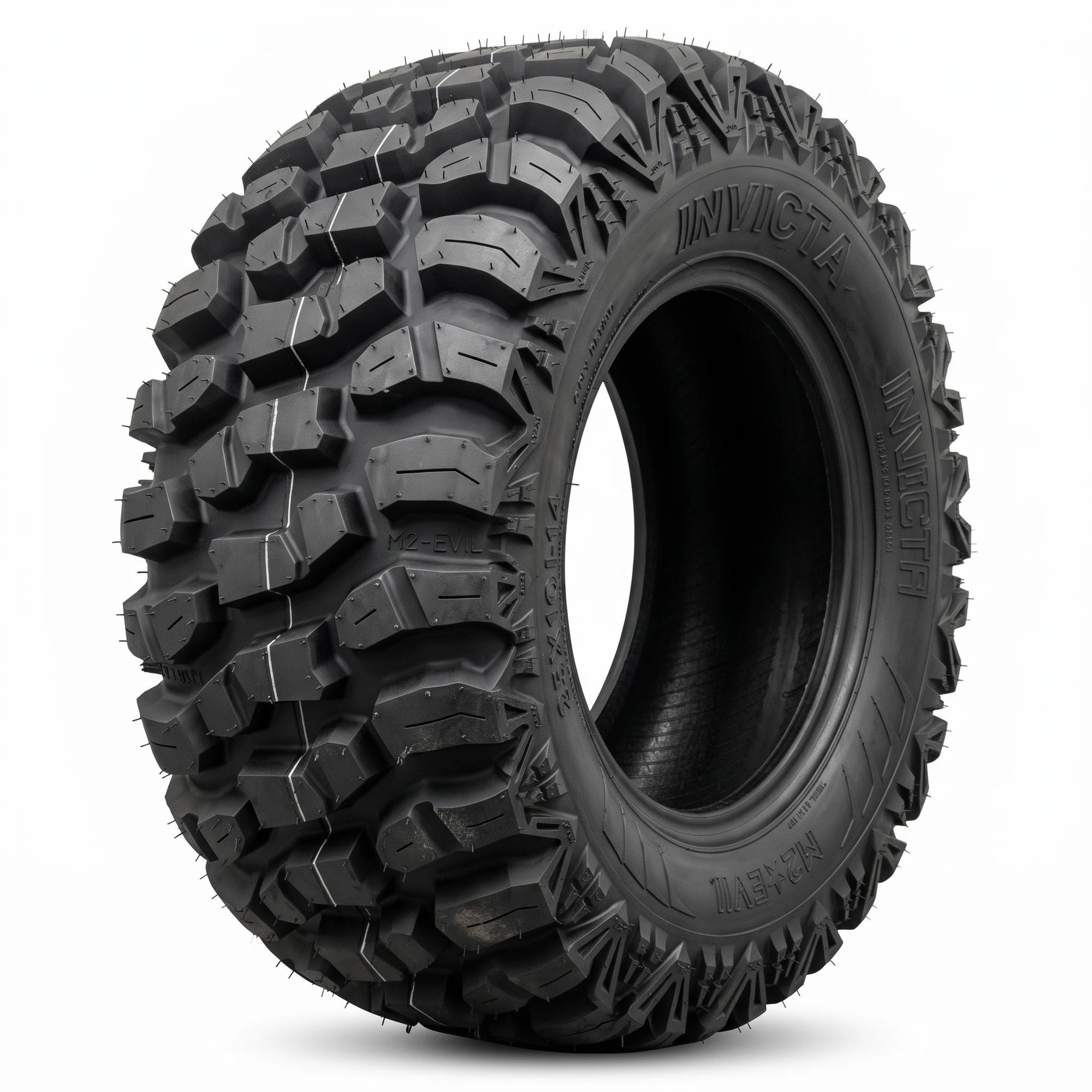
Lugs work by penetrating a surface that yields. Mud, sand and loam yield, so tall widely spaced lugs sink in and push against material that has nowhere to go. Hardpack does not yield. The lug cannot penetrate, so all it can do is stand the tire off the ground on a handful of small rubber posts.
That is the whole problem in one sentence: on firm ground an aggressive tread reduces contact area instead of increasing it. Fewer square inches of rubber touching, more flex in each block, and grip that arrives late and leaves suddenly when the tire finally breaks loose.
What a Trail Tire Trades For Speed
A hardpack pattern is not a cheaper tire. It is a different set of choices, and each one buys something specific.
- Tight lug spacing. More blocks in contact at once means more rubber on the ground and a smoother handoff as the tire rotates. On firm surfaces that is grip; in mud the same spacing packs solid on the first revolution, which is exactly why it is the wrong tire there.
- Shallow tread depth. Less block height means less squirm under cornering load, so steering inputs arrive at the ground instead of being absorbed by rubber flexing on itself. It also drops rolling resistance, which is where the extra top end comes from.
- Continuous shoulder. A defined, closely spaced shoulder holds a line when the surface breaks loose at the edge of a corner. Isolated side knobs are for finding the wall of a rut, and a groomed trail does not have one.
The ZIPPER is that argument built into a tire — a shallower, tightly spaced tread that cuts rolling resistance so the machine feels quicker, with enough shoulder to hold a corner when the surface lets go.
Not All Firm Ground Is the Same
Groomed and Maintained Trail
Machine-graded surface, consistent grip, predictable corners. This is the ZIPPER's home ground and the one place where a dedicated trail tire is unambiguously the right call. Everything an aggressive tire offers here is dead weight.
Dry Clay and Baked Two-Track
Firm, but glassy when it is polished and treacherous the moment it gets a film of moisture on it. A pure trail pattern is quick here and vague in the wet. A moderate all-terrain gives up a little speed for a much larger margin when the surface changes.
Gravel and Forest Road
Loose material over a firm base — a hybrid case. Contact area still rules, but you want enough tread depth to reach through the loose layer to the hardpack underneath, and enough ply rating to survive sharp gravel at speed.
Mixed Days
Most riding. Firm connectors, a few soft sections, one mud hole everyone stops to look at. Optimising entirely for the ten percent is the most common and most expensive tire mistake there is.
Picking by Surface Mix
Be honest about the split. Not the ride you plan — the rides you actually take.
| Your riding | Tire | Sizes | What you gain |
|---|---|---|---|
| 80–100% groomed trail | ZIPPER | 30x10-14 – 35x10-15 | Top speed, steering precision, tread life |
| 60–80% firm, some soft | ALL-TERRAIN | 30x10-14 – 35x10-15 | Most of the speed, a real wet-weather margin |
| Same mix, ATV | ALL-TERRAIN – ATV | 25x8-12 – 28x10-14 | The balanced ATV answer |
| Firm trail plus rock sections | M2 EVIL | 30x10-14 – 35x10-15 | 8-ply radial protection where it is needed |
| Under 40% firm | BLACKWIDOW or BLACKTAIL | See mud guide | You are not a hardpack rider |
Half the mud tires we sell go on machines that see mud twice a year. Those riders paid for tread they never use and gave up speed, noise and tread life every single ride to carry it around.
Adam Miller, Senior Product Specialist
Four Questions That Pick the Tire For You
1. What does a normal ride look like?
Not the annual trip. The Saturday you actually ride. If that Saturday is groomed trail and forest road, the tread you need is shallower than the tread you want.
2. How much road and trailer transit is in it?
Connector pavement and staging-area miles are where aggressive tread wears fastest and sounds worst. Riders with long transits get more out of a trail tire than they expect, and it shows up in tread life rather than lap times.
3. Does it rain where you ride?
A pure trail pattern loses more than an all-terrain does when hardpack turns greasy. If your season includes real wet weather on clay, the ALL-TERRAIN is the safer default even though the ZIPPER is faster on the good days.
4. How long do you keep a set?
Shallower tread on a firm surface lasts substantially longer than deep tread on the same surface, because deep lugs on hardpack wear by scrubbing rather than by rolling. If you keep tires until they are done, the cheaper tire per season is often the shallower one.
Setup and Living With It
Run it harder than you would run mud. Sixteen to eighteen PSI on a UTV, eight to ten on an ATV. Extra footprint buys nothing on a surface that already grips, and a soft tire on hardpack just wears its shoulders and vagues up the steering.
Rotate on schedule. Hardpack wear is even and predictable, which makes rotation genuinely effective — unlike mud tires, where damage rather than wear usually decides the replacement date. Rotate at the same interval as your oil and the set lasts noticeably longer.
Watch for centre wear. A trail tire wearing a strip down the middle is telling you the pressure is too high for the load. Drop two PSI and check again in a month before you blame the tire.
Keep the aggressive set. If you already own mud tires, a second set of trail tires on cheap wheels is a twenty-minute swap and it makes both sets last. That is a far better use of money than one compromise tire that is mediocre at each end of the range.