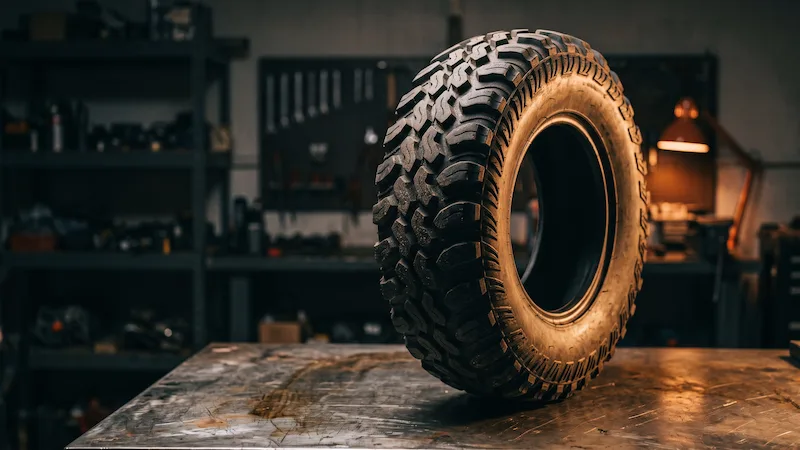
A tire stamped 8-ply has not held eight plies since your grandfather bought his last set. The number is a strength claim, not a build sheet, and load range letters are the same claim spelled with a letter instead. Here is what those markings actually promise, what the extra plies cost you in weight and ride, and how to work out which rating your machine needs.
Where the Ply Number Came From
Early tires really were stacks of cotton plies, and the number on the sidewall was a literal inventory. Eight plies meant eight layers of cotton cord doing eight layers of work. Then polyester and nylon arrived, one modern layer began doing the job of two or three cotton ones, and the count stopped describing anything you could find inside the tire.
The number survived anyway. Ply rating is a translation now: an 8-ply rated tire carries what an old eight-cotton-ply tire carried. That is the whole promise. Nobody at the factory counted to eight.
What an 8-Ply Tire Actually Contains
Cut one open and you will usually find two or three polyester body plies, often with a nylon or steel belt sitting under the tread face. The rating comes from what the finished casing survived on a test rig, not from the layer count, which is why two tires both stamped 8PR can behave nothing alike in rock.
Load Range Is the Same Claim in a Different Alphabet
Load range letters were supposed to end the confusion. Mostly they relocated it, because each letter maps straight back onto the ply rating it replaced.
| Load Range | Ply Rating | Where It Shows Up |
|---|---|---|
| B | 4-ply rated | Light quads, turf and yard duty |
| C | 6-ply rated | Trail machines, most stock UTV fitments |
| D | 8-ply rated | Heavy UTVs, rock, cargo and cut stubble |
| E | 10-ply rated | Commercial and towing loads, rare in powersports |
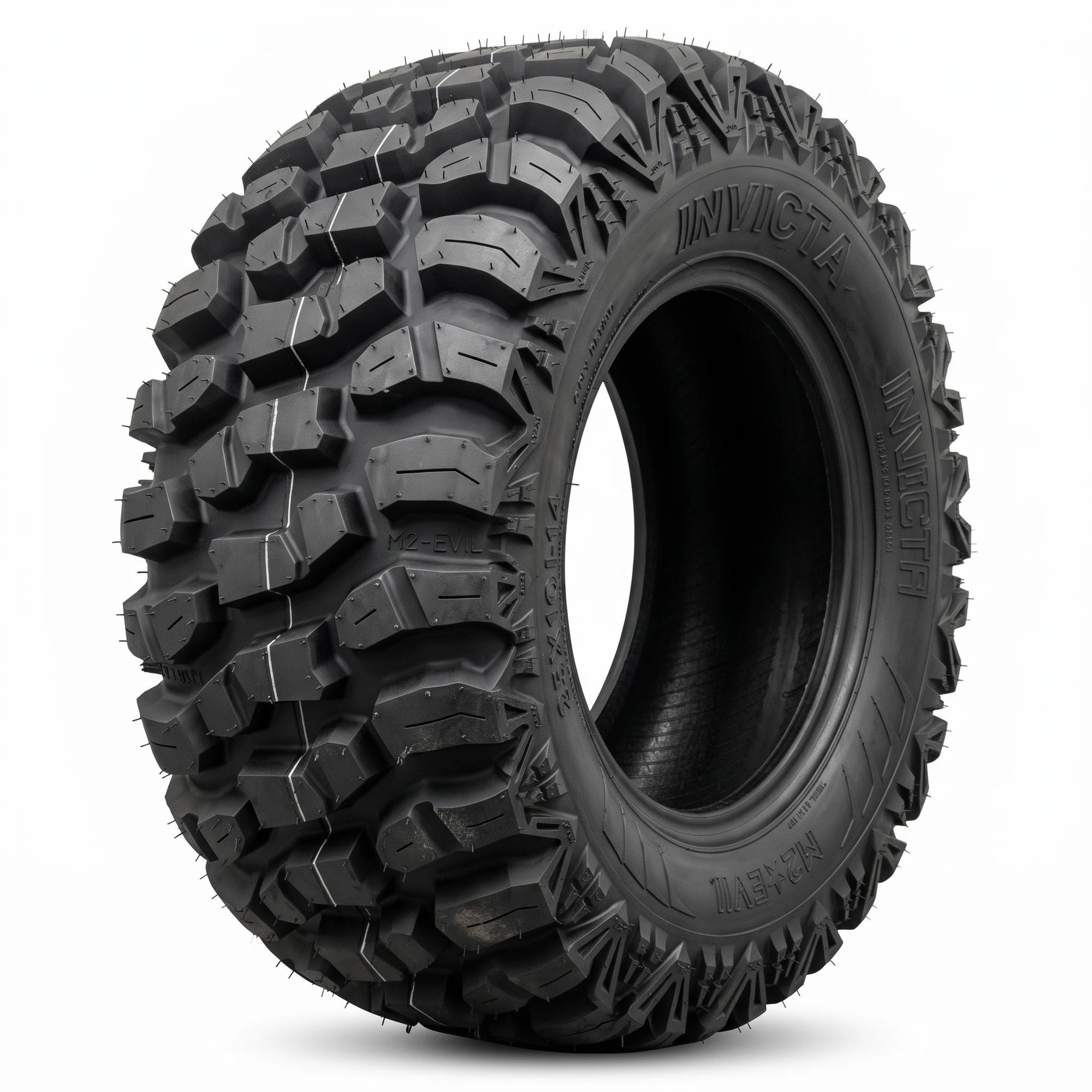
Plenty of powersports tires skip the letter and stamp 6PR or 8PR on the sidewall instead, and most of them add NHS, meaning Not for Highway Service. None of those markings give you a load in pounds, which is the one figure you can plan a purchase around.
The Number That Is Not a Marketing Number
Find the load line: MAX LOAD 800 LBS AT 20 PSI COLD, or whatever your candidate tire carries. That is a measured result, and the pressure is part of the result. Run the same tire at ten psi in a bog and you are outside the rating, which is fine at bog speed and a bad idea with a loaded cargo box on a fire road.
Load capacity and puncture resistance get treated as one property, and they are two. A stiff eight-ply casing can still take a shale edge through the wall if the shoulder lugs stop short of it. Plies carry weight. Lug geometry protects the sidewall.
What the Extra Plies Cost You
Every ply you add turns up somewhere else on the machine, usually as a bill.
- Weight in the worst possible place. A ply is rotating mass and unsprung mass at the same time. It dulls acceleration, adds belt heat, and hands the shocks more to control over the same washboard.
- A harder ride. Stiff sidewalls pass along what they refuse to absorb. On hardpack an eight-ply set will report every rock you cross, in detail.
- Less shape change when you air down. This is the one riders miss. Airing down works because the casing flattens and stretches the contact patch, and a heavy casing resists doing that. In sand, where flotation is the entire job, a six-ply at eight psi will float over a stiffer tire at the same pressure.
Which means the right answer for a lot of buyers is fewer plies than the forums recommend. A machine that lives on trail and gravel with two people and a cooler is not compromising with a 6-ply rated tire. That is the correct part for the job.
How the Invicta Line Is Built
Construction first, tread pattern second. Here is what each casing in the range is actually for.
| Tire | Construction | What the Casing Gives You | Best For |
|---|---|---|---|
| M2 EVIL | 8-ply Radial | Load capacity that still flattens at low pressure | Clay, deep bogs, stump and stubble country |
| M2 EVIL – ATV | 8-ply Radial | Same protection in a lighter quad casing | Rocky mud, mixed terrain |
| BLACKWIDOW | 6-ply Bias | Crossed sidewall plies under wraparound shoulder lugs | Rock ledges, shale, sharp trail |
| BLACKTAIL | 6-ply Bias | Sidewall support with weight on the racks | Utility quads, working loads |
| ALL-TERRAIN | 6-ply Radial | Compliance and even wear over long miles | Trail, gravel, hardpack, the ride home |
Nobody has ever called to tell me their trail machine needed more plies. I hear the opposite every summer, usually from someone who bought eight-ply for sand.
Adam Miller, Senior Product Specialist
Working Out the Rating You Need
Three answers get you to the right casing, and none of them involve reading a best-of list.
1. Weigh the Machine the Way You Ride It
Start with dry weight from the manual, then add fuel, passengers, cargo, and whatever bolted on since you bought it. Divide by four for the average corner, then add roughly a third back on, because weight moves to the outside tires in a turn and off camber. A 1,700 pound sport UTV with two adults and gear puts something near 550 pounds on a loaded corner, and a tire rated 800 pounds at 20 psi covers that with margin left over.
2. Ask What Is Trying to Cut It
Wet clay, loam and sand carry nothing sharp, and a six-ply lives a long life in all three. Shale, cut stubble, coral rock and logging slash kill tires through the sidewall instead of the tread, and that is where eight-ply radial construction with lugs that wrap down the wall earns the extra money.
3. Ask What Pressure You Intend to Run
If you air down for terrain, buy the casing that likes being aired down. If you run 18 to 20 psi and haul weight, buy the stiff one and enjoy the load rating. Buying a heavy casing and then airing it down to eight psi gets you the weight penalty without the flotation.
Reading the Sidewall in the Driveway
Find the load line first. Max load and the pressure it was measured at, together, as a pair. That pair is comparable between brands in a way that 6PR and 8PR never are.
Check for NHS. Not for Highway Service means no speed rating and no highway intent. If your machine wears a plate and sees pavement between trails, that stamp matters more than the ply number above it.
Do not shop the biggest number. Ply rating is a ceiling, not a score. Buying past what your machine loads onto a tire costs weight, ride quality and low-pressure performance, and buys back nothing you will ever use.
Write down the max load and its stated pressure for every tire on your short list, then compare those two figures across the set. It is the only claim on the sidewall that is not a translation of something older.